 SOCIETY OF INDEPENDENT PROFESSIONAL
EARTH
SCIENTISTS
DENVER CHAPTER
SIPES Denver Chapter
27551 Craig Lane
Golden, CO 80401
United States
ph: 303-730-2967
sipesden
Home

Society of Independent Professional
Earth Scientists
Click here for the 2026 S.I.P.E.S. Dues Form - please use this form to update your contact information as well
Click here to pay your dues online

Next Event:
October 22, 2026
Our Presenter:
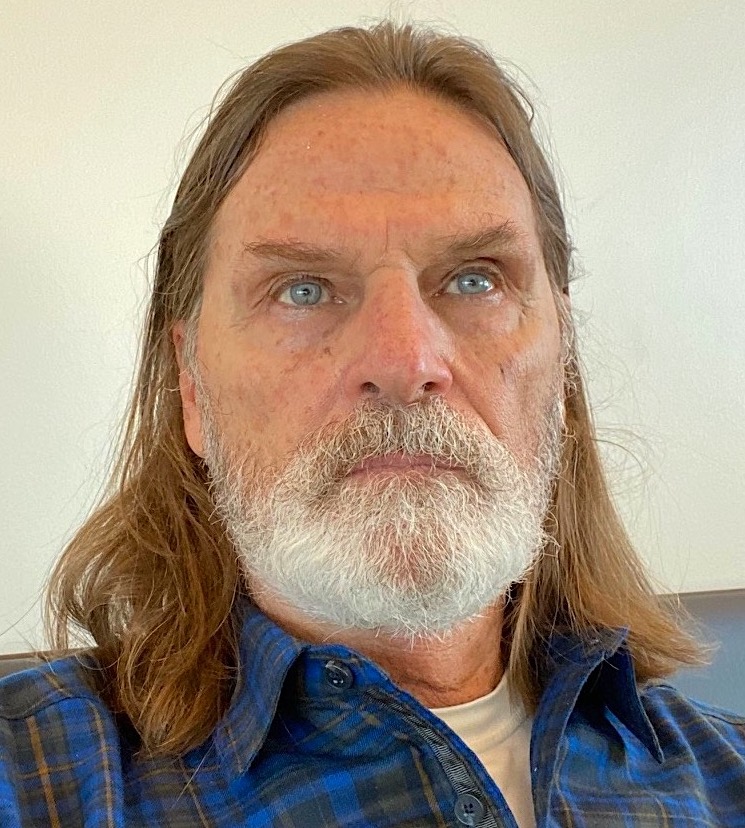
James S. Dean
"Exploration in the Amazon Rain Forest"
All attendees MUST RSVP!
Please RSVP by 11:30 a.m. on the Monday prior
When: Thursday, October 22, 2026, 11:30 a.m. - 1:30 p.m.
Where: Wynkoop Brewery - 1634 18th Street, Denver, CO 80202
Cost Structure:
- Members $25 (Presentation & Meal)
- Non-members $30 (Presentation & Meal)
- Walk-ins will no longer be allowed due to an issue with the Wynkoop. Please pre-purchase a lunch to attend. Sorry for the inconvenience!
Please feel free to share this information with any friends and colleagues who might be interested!
Abstract:
Block 67, located in the northeastern Maranon Basin of Peru, is a 2-million- acre
exploration concession signed by Advantage Resources in 1995. The block is in a
remote section of the rain forest with the only access provided by tributaries to the
Amazon River. All operations are helicopter supported from base camps along the
rivers. In 1996, with farm-in partner Amoco, Advantage obtained 500 km of 2D
reconnaissance seismic data, identifying 15 potential structural leads. Although more
than 200 km from the Andean Mountain front, all leads were subtle closures resulting
from inversion of Jurassic and earlier normal faults during multiple phases of Andean
Compression during the late Cretaceous, Eocene, and Mio-Pliocene.
In 1997, Barrett Resources replaced Amoco and an additional 500 km of infill 2D data
were acquired over the most promising leads. In 1998, three exploration wells were
drilled in the largest closures, Paiche, Dorado and Piraña, each named after a local fish.
Between 150 and 200 ft of oil pay was logged and tested in each well from multiple
zones of Cretaceous sandstones in the Chonta, Vivian and Basal Tena formations.
Although the oil is heavy with gravities ranging from 11 to 15 API, the excellent
petrophysical properties and high reservoir temperatures resulted in rates more than
1,000 bopd.
With the purchase of Barrett Resources by the Williams Companies, and a softening of
oil price, exploration interest in a remote rain forest concession waned. The discoveries
were ring fenced as the Block 67 Retained Areas and the remaining exploration
acreage relinquished. Believing in the potential of the discoveries, James Dean and Ben
Schulein, with the financial support of Private Equity, and the intervention of Steve
Natali, obtained ownership of Barrett Resources Peru for future considerations, and
returned to the abandoned blocks to drill confirmation wells. Both wells in the Paiche
and Dorado structures were successful, with test rates of over 2,000 bopd. Based on
the delineation wells, Netherland Sewell and Associates reserve reports indicated
recoverable resources of 350 MMBO (2P) and 800 MMBO (3P). A development plan
contemplating a 200 km pipeline across the jungle with a parallel line to bring in diluent
was approved by the Peruvian government in 2007. Early the next year, Block 67 was
sold for $750 Million.
Bio:
An explorationist with over 45 years of experience who specializes in the Petroleum
Systems of the Sub Andean basins of South America. Dr. Dean holds a PhD from
Colorado School of Mines. He began his career in 1979 as a Senior Geologist for Shell
Oil. In 1985 he brought several Denver Independents together to form Advantage
Resources Intl. to participate in the newly announced lease sales in Argentina. Over the
next 35 years, as CEO of Advantage and successor companies, he led multiple
geological/geophysical studies and signed over a dozen exploration contracts
throughout South America. Advantage entered farmout agreements with majors and
independents such as Shell, Amoco, Mobil, Texaco, Marathon, Murphy, BHP,
Burlington Resources, and Barett Resources to jointly explore the concessions, which
resulted in the discovery of over 350 MMBO and 2 TCF of gas. From 2013, as CEO of
La Luna Resources, Dr. Dean has been leading a joint venture with Denver based
independents in the Sinu-San Jacinto Basin of Colombia. The exploration is ongoing but
the result to date has been two gas discoveries and one oil discovery with potential
reserves of over 2 TCF gas and 100 MMB oil.
WHAT IS SIPES?
The Society of Independent Professional Earth Scientists (SIPES) is the only national organization designed exclusively for the independent or consulting professional earth scientist. Members include geologists, engineers, geophysicists, geochemists, and other earth scientists.
Our Mission
To be the pre-eminent organization for furthering the professional business interests of independent practitioners of earth sciences.
- Professional Competence
- Professional Business Ethics
- Presenting a favorable, credible and effective image of Society

Local Events:
Meetings for 2026 will be held at the
1634 18th Street
Denver, CO 80202
